This section provides an overview of all the different capabilities offered by Athena Chat.Attach Files
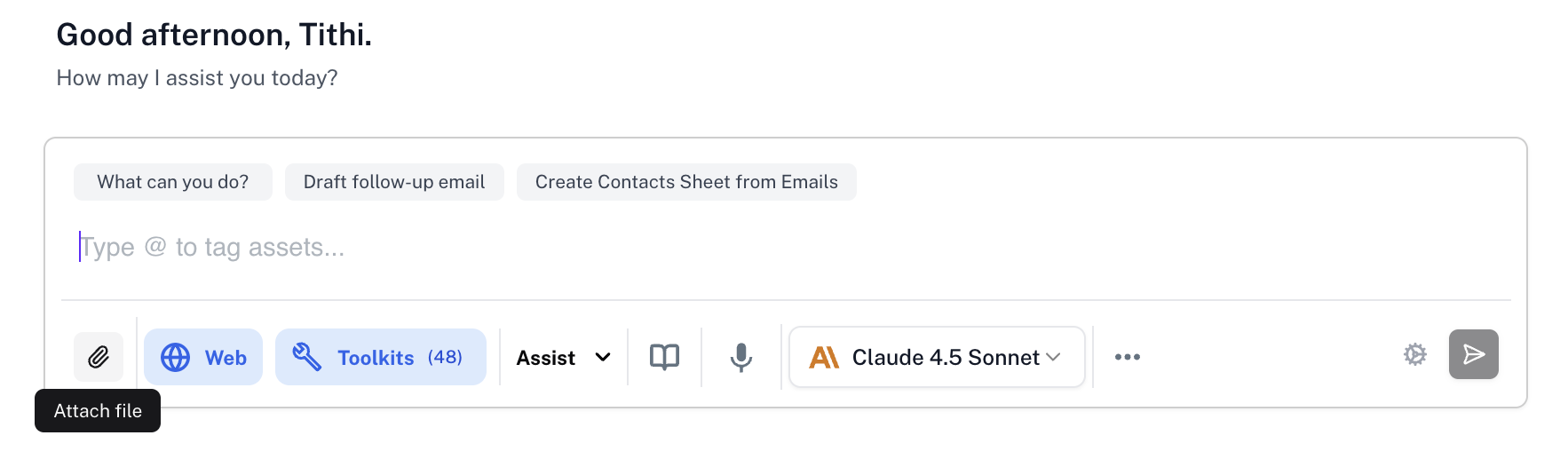
Attach files from your computer directly either by dragging and dropping them onto the Chat bar or clicking on the Attach File button.Web Search
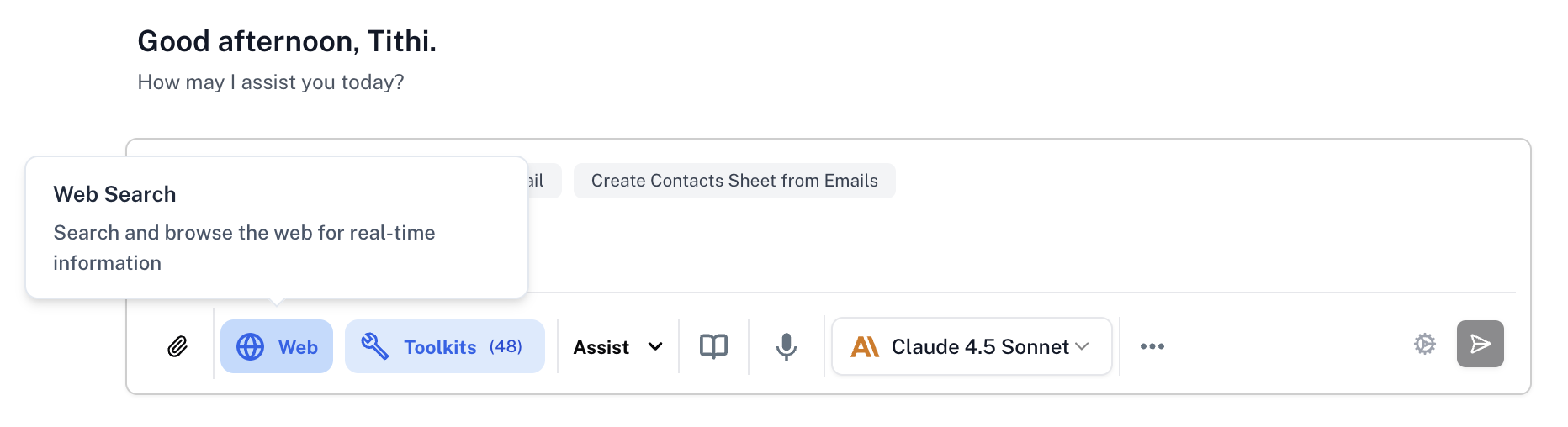
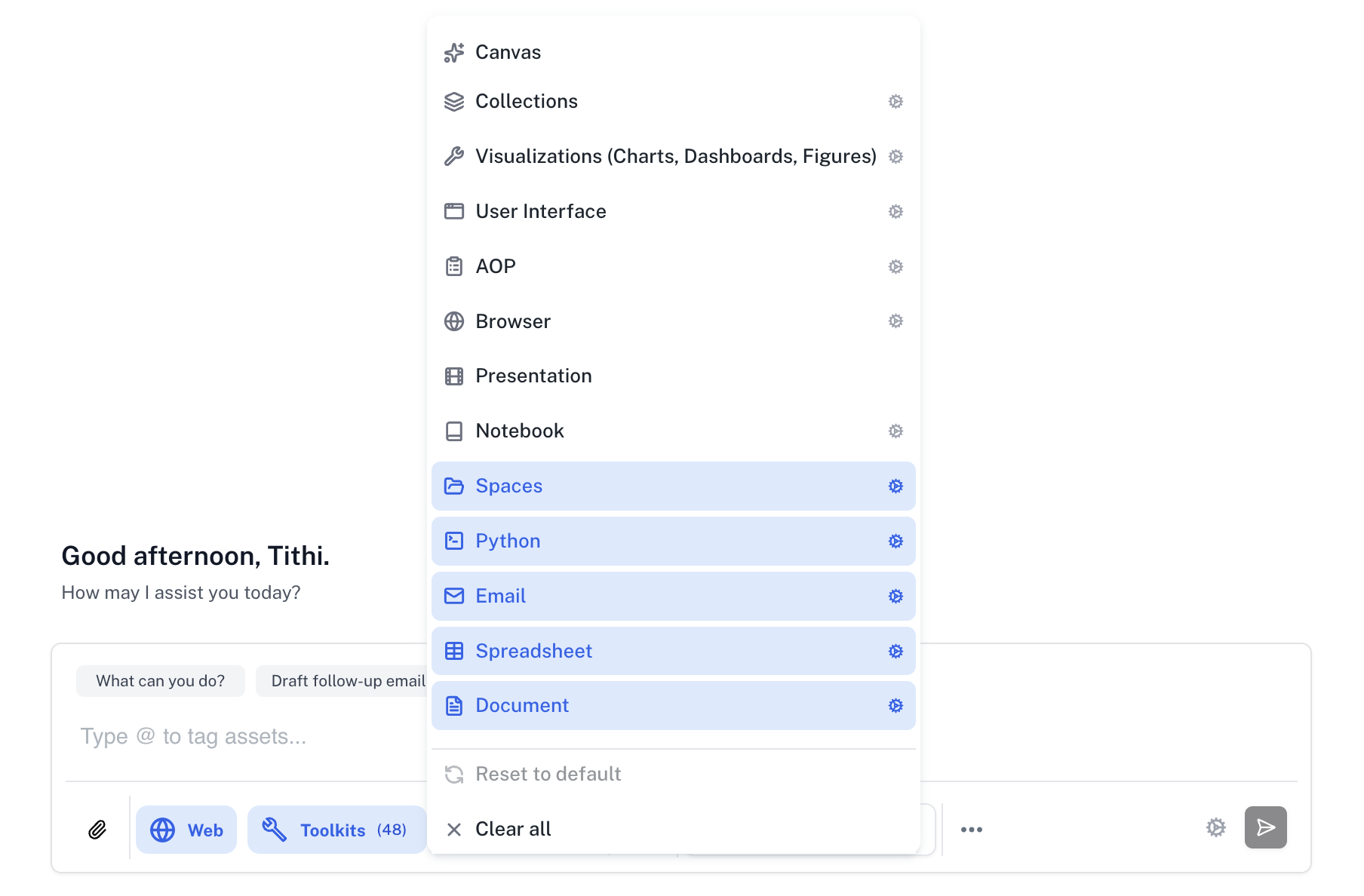
Toggle Athena’s capability to perform real-time web browsing by clicking on the Web button.Choose from a number of toolkits designed to optimize and automate workflows. Toolkits are specialized suites designed to handle discrete tasks efficiently within larger workflows. They are the building blocks of complex processes, each performing a specific function such as document analysis, email management or coding tasks.Toolkit Suggestions - Athena will automatically suggest relevant toolkits based on the assets you have open and the content of your chat messages. For example, if you have a document open, Athena may suggest enabling the Document Toolkit. Similarly, if your message mentions creating a spreadsheet, Athena will suggest the Spreadsheet Toolkit. Simply click Enable to activate the suggested toolkit.
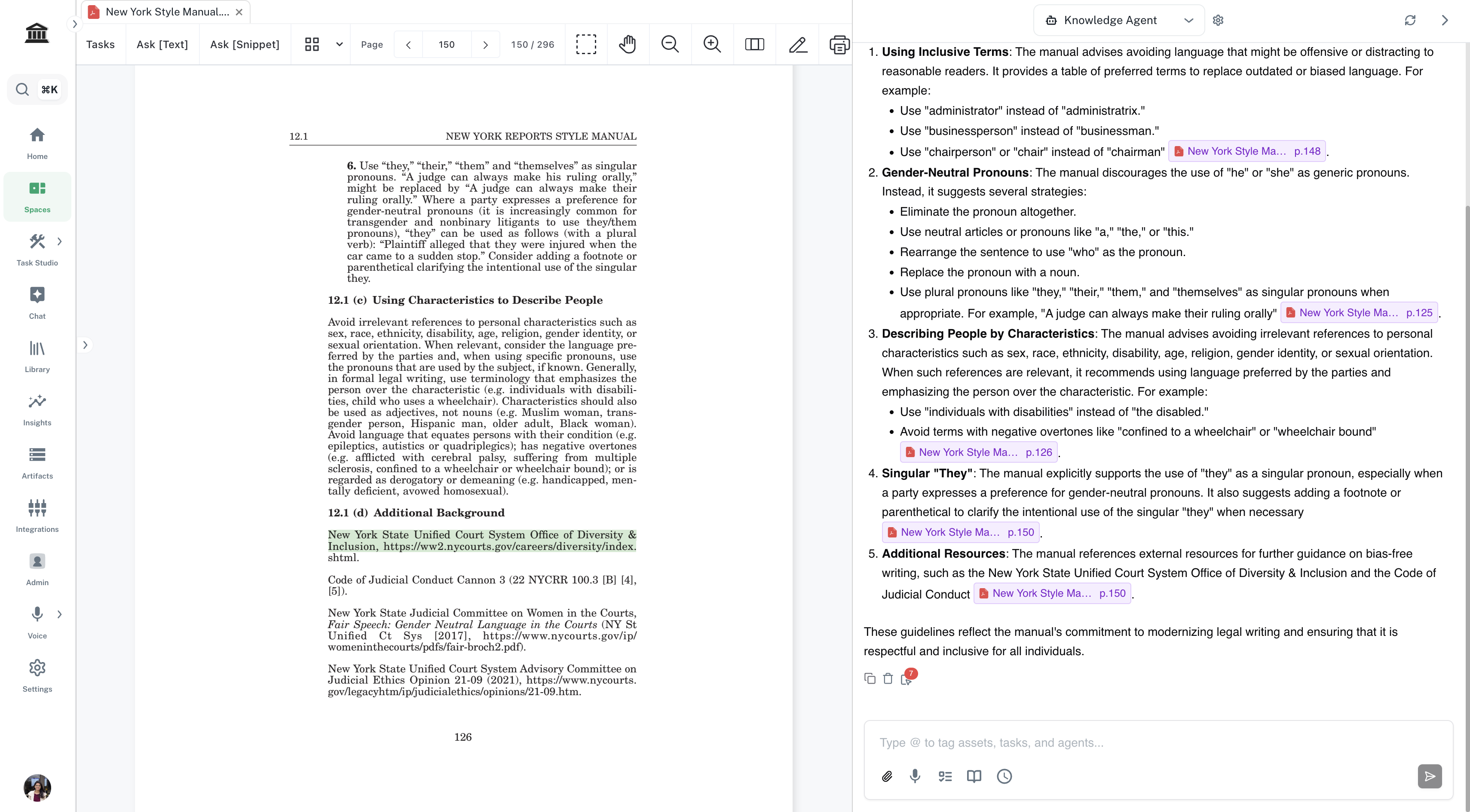
Choose the Right Agent Persona
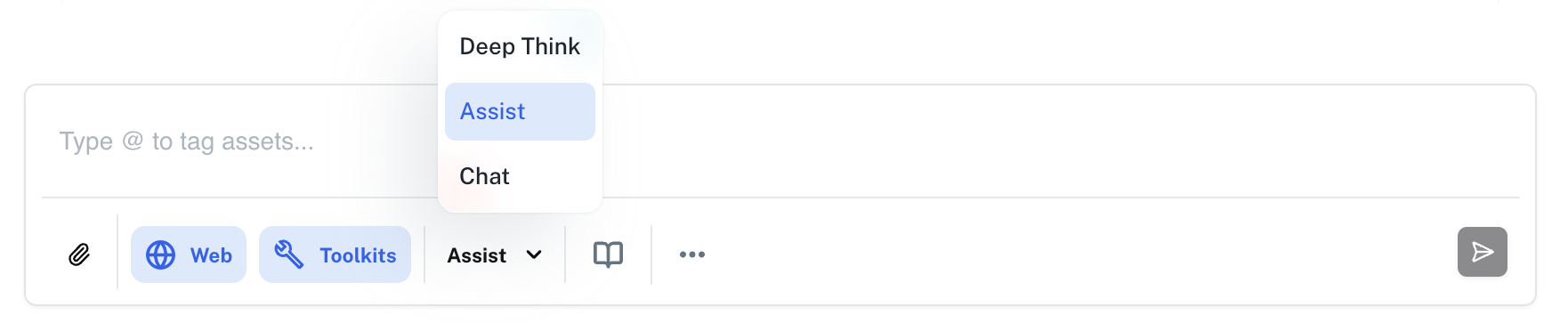
Agent Personas allow you to optimize Athena’s behavior for different types of tasks. Each persona is designed for specific use cases to help you get the best results.When to use each persona:
-
Chat - Best for brainstorming, Q&A, summaries, and ideation. Read-only mode for fast responses without modifying your workspace.
- Example prompts: “Summarize this PDF,” “Give me 5 approaches to solving this problem,” “Explain this concept in simple terms”
- Use when: You want quick answers or insights without creating or modifying files
-
Assist (Default) - Best for day-to-day work that requires reading and writing. Uses tools to draft emails, create documents, modify spreadsheets, and execute AOPs. Balanced speed and depth.
- Example prompts: “Draft a customer reply and save as a Doc,” “Pull these rows into a Sheet and create a chart,” “Create an AOP to analyze quarterly reports”
- Use when: You need Athena to take action and create or modify assets in your workspace
-
Deep Think - Best for multi-step, complex reasoning across multiple assets. Slower by design and may use multiple agents working together for comprehensive analysis.
- Example prompts: “Compare these 5 contracts and produce a redline memo with citations,” “Analyze this dataset and identify trends, anomalies, and recommendations”
- Use when: You have complex problems requiring thorough analysis across multiple documents or data sources
- Tip: Pair with the Effort Dial for even more rigorous analysis
Not sure which to pick? Start with Assist for most tasks. You can switch personas as your needs evolve during the conversation.
Agent Context
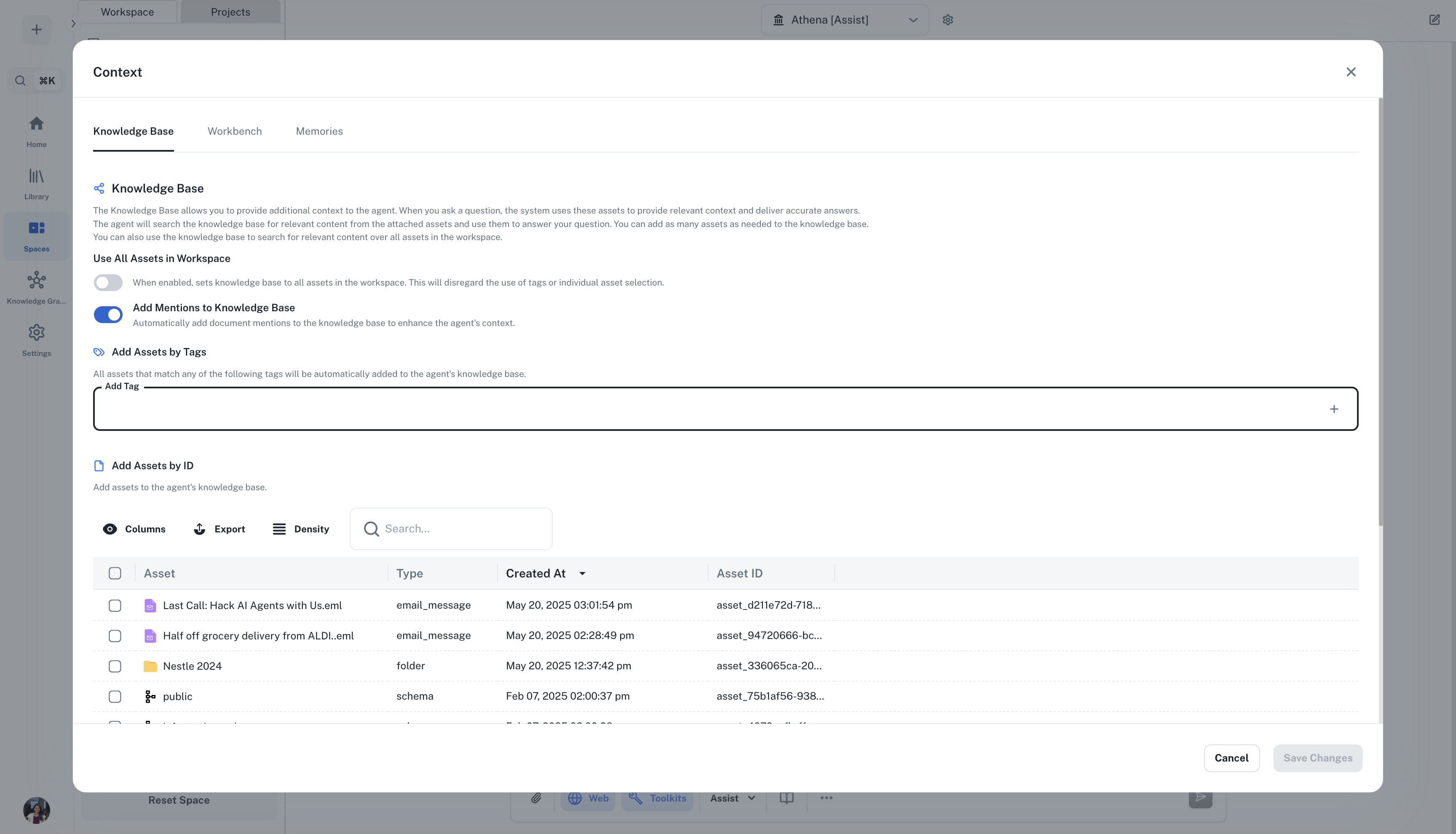
The Agent Context menu lets you configure contextual knowledge that Athena has access to, for example, knowledge base, memories and workbench. Learn more about these in our guides on contextual knowledge.Additional Options
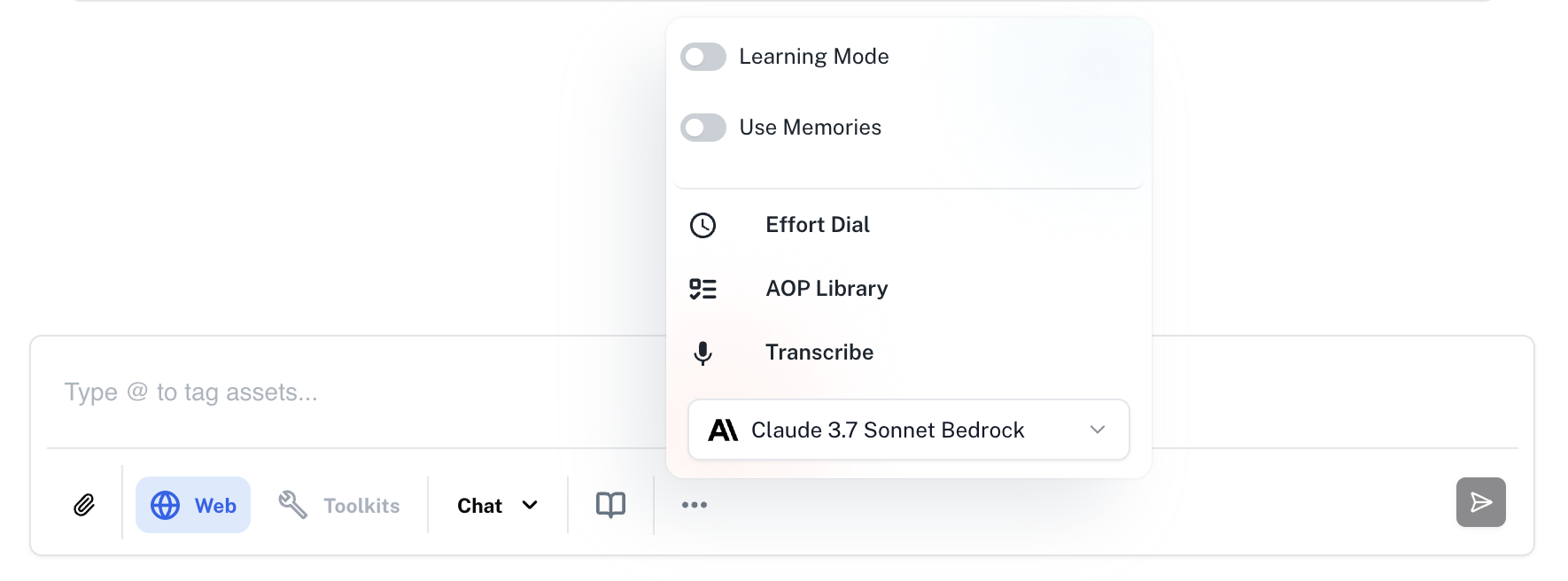
- Learn Preferences - Toggle this on for Athena to learn your preferences from your conversations, such as formatting styles, tone, and workflow patterns.
- Use Preferences - Toggle this on for Athena to apply your learned preferences to personalize her responses and outputs.
- Effort Dial - Have Athena execute a request for a dedicated period, making her spend a minimum amount of time thinking & processing before responding.
- AOP Library - Use this button to view or create Agent Operating Procedures (AOPs) which enable Athena to dynamically execute multi-step workflows.
- Transcribe - Use Athena Voice to give speech commands to Athena for her to transcribe and execute your requests.
- LLM Selector - Choose from a wide range of LLMs based on the complexity of your task.